Housing - Mar 2026
Economy Headlines
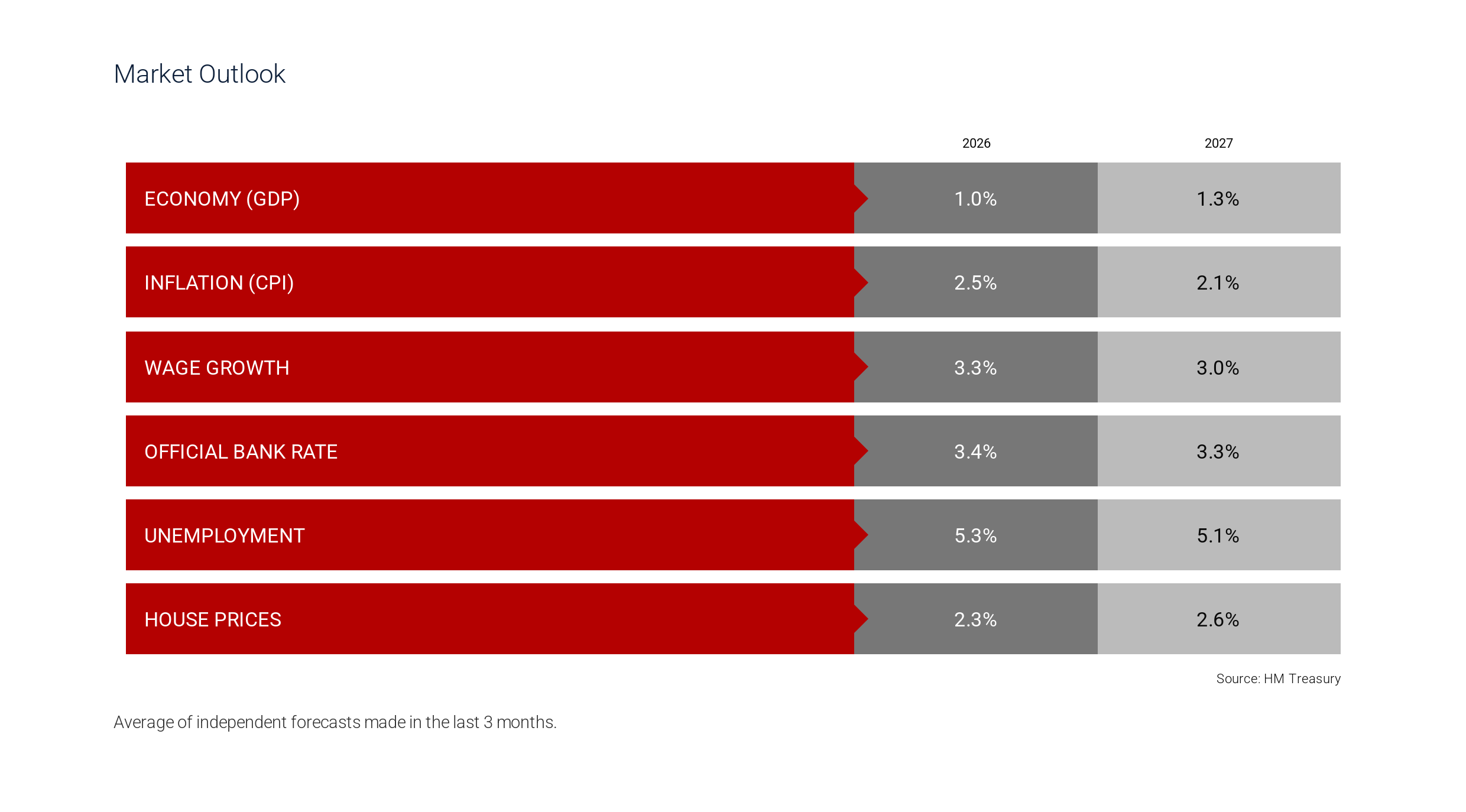
The Bank of England held interest rates at 3.75% in March, in the wake of the economic impact of the Iran war.
In the Spring Statement, the OBR downgraded its forecast for economic growth this year to 1.1%, down from 1.4% at the time of November's Budget.
CPI inflation rose by 3.0% in the 12 months to February 2026, unchanged from January (ONS).
House prices
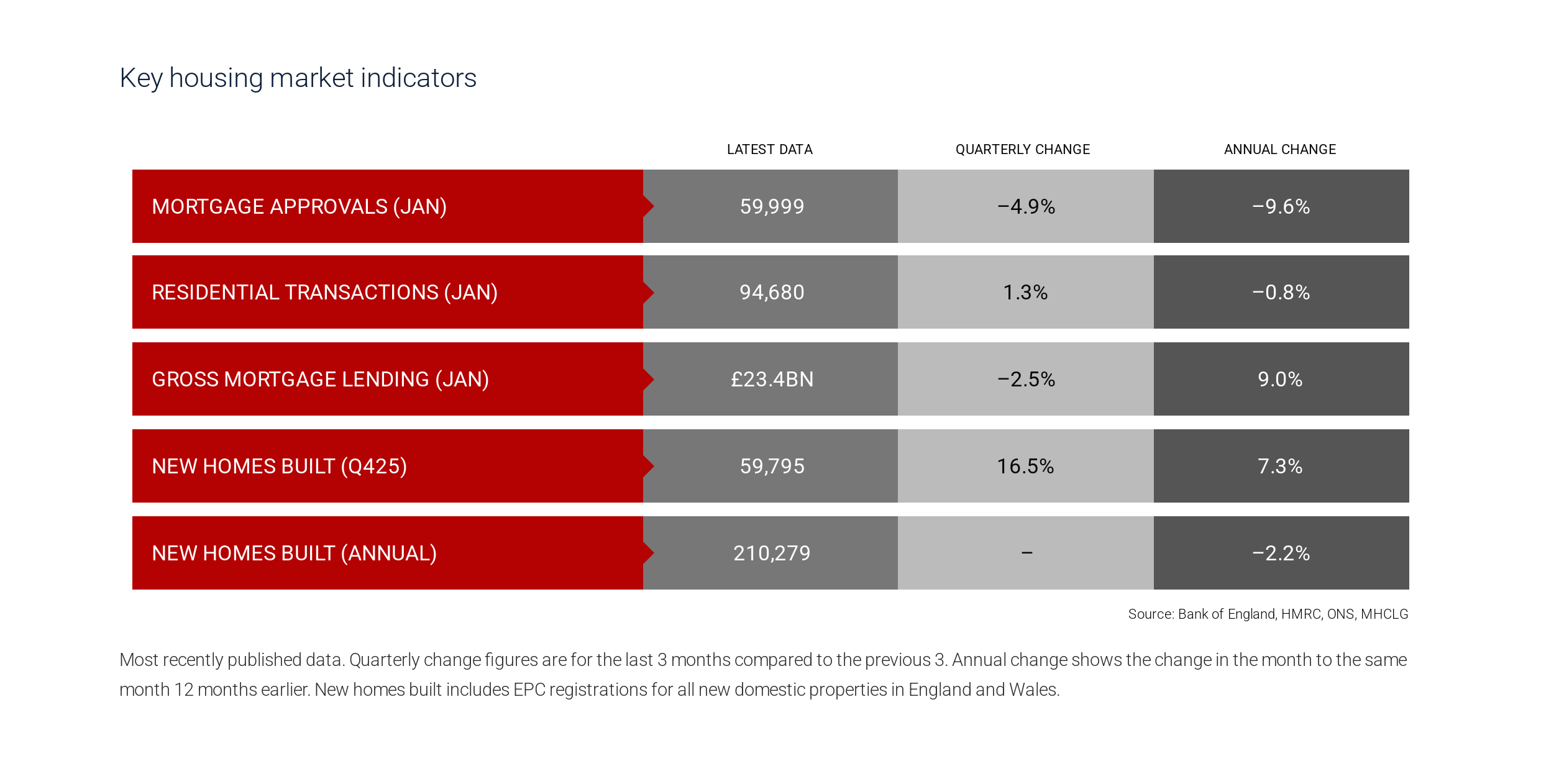
Average house prices across the UK were £268,421 in January, which is 1.3% higher than a year ago (ONS).
The average price of newly listed homes for sale rose by 0.8% in March to £371,042, a typical seasonal increase (Rightmove).
House prices are forecast to grow by 3.3% in 2026 (HM Treasury Average of Independent Forecasts).
Transactions
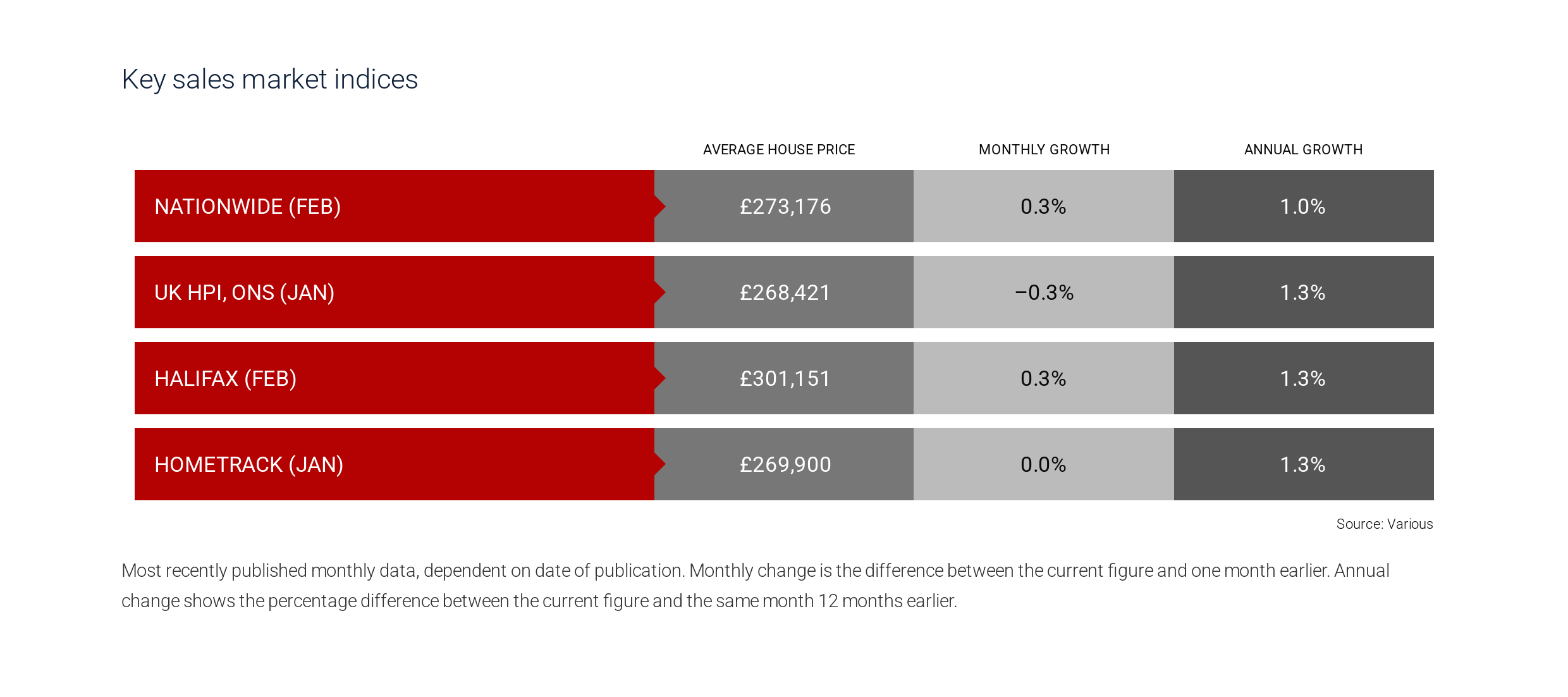
There were 94,680 transactions in January, down by 1% year-on-year (HMRC).
In the latest RICS survey, a net balance of +17% of respondents anticipate that sales volumes will pick up over the year ahead, more moderate than the +35% last month.
The number of sales being agreed is 2% behind the strong market of this time last year, and 5% ahead of 2024 (Rightmove).
Demand
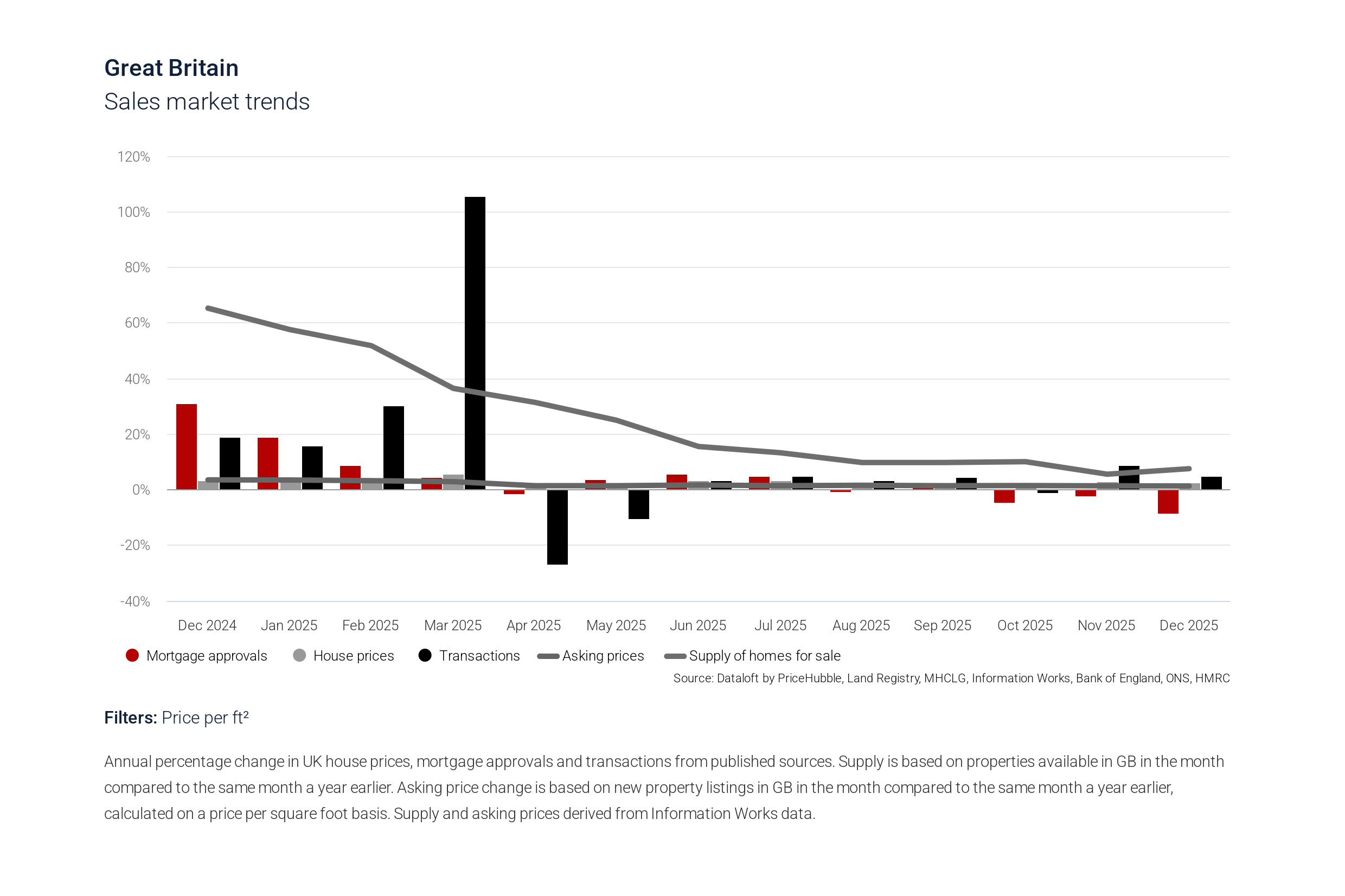
There were 59,999 mortgage approvals in January which is -10% lower than a year ago (Bank of England).
There are 6% more homes available for sale than a year ago (Zoopla).
A net balance of -26% was returned for the RICS new buyer demand series in February, down from -15% last month.
Investment/lettings
The average void period dropped from 26 days in January to 22 days in February (Goodlord).
Rents are forecast to increase by 3-4% over 2025 as slower growth in large cities is offset by faster growth in more affordable markets (Zoopla).
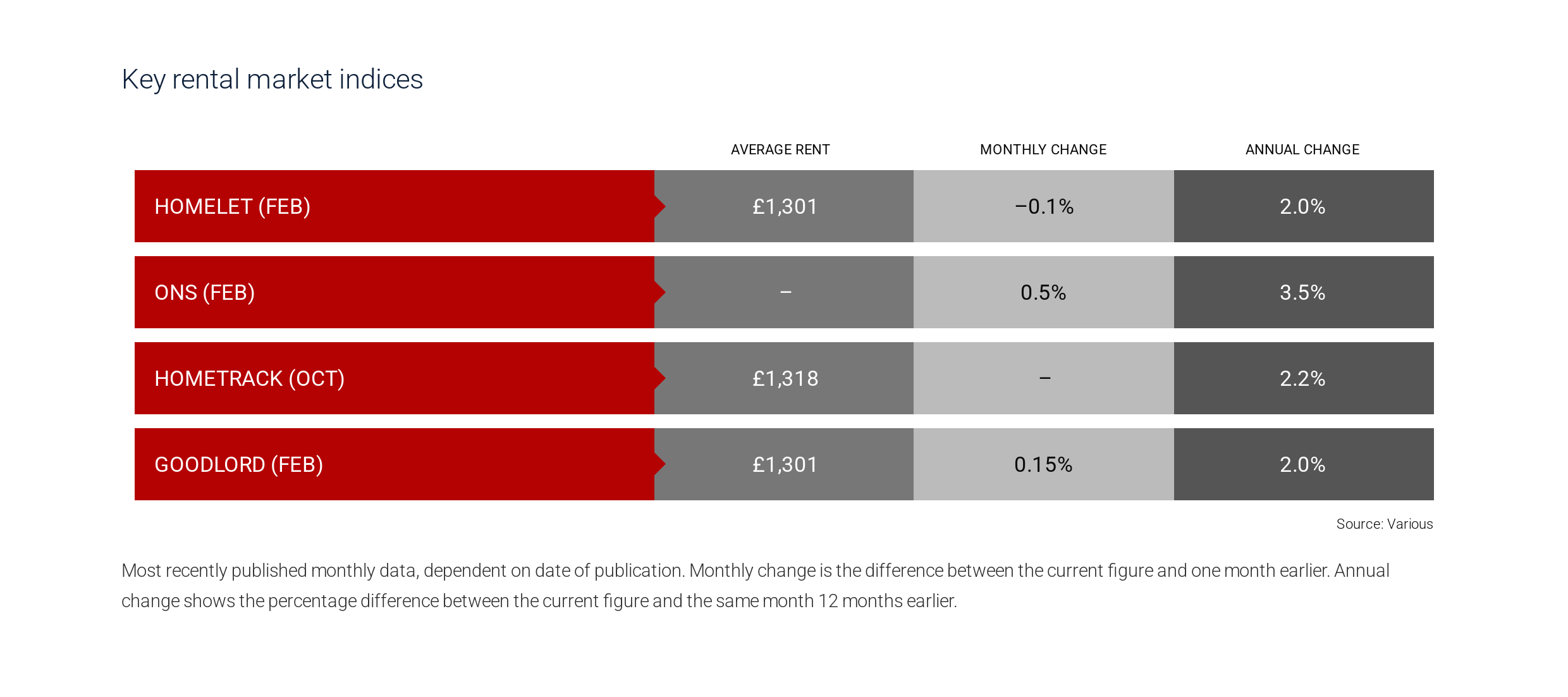
The average rent in February was £1,301, up 2.0% year on year (HomeLet).
Development
Over 210,000 new homes were built in the year to the end of Q4 2025, a fall of 2% compared to the previous 12 month period (DLUHC).
There are now over 146,700 completed Build to Rent units, an uplift of 13% nationally, year on year (BPF).
The HBF says that to meet the government's target of building 370,000 homes annually, approvals must increase by over 150%.
